Naples sits on the Southwest Florida coast in Collier County, where the tropical climate, heavy rainfall, coastal humidity, and dense landscaping create a pest environment that is active every day of the year. There is no cold season to reduce populations. There is no dry season harsh enough to interrupt breeding cycles. If you own a home here, these are the species you will encounter most frequently and what drives each one into your Naples property.
Termites
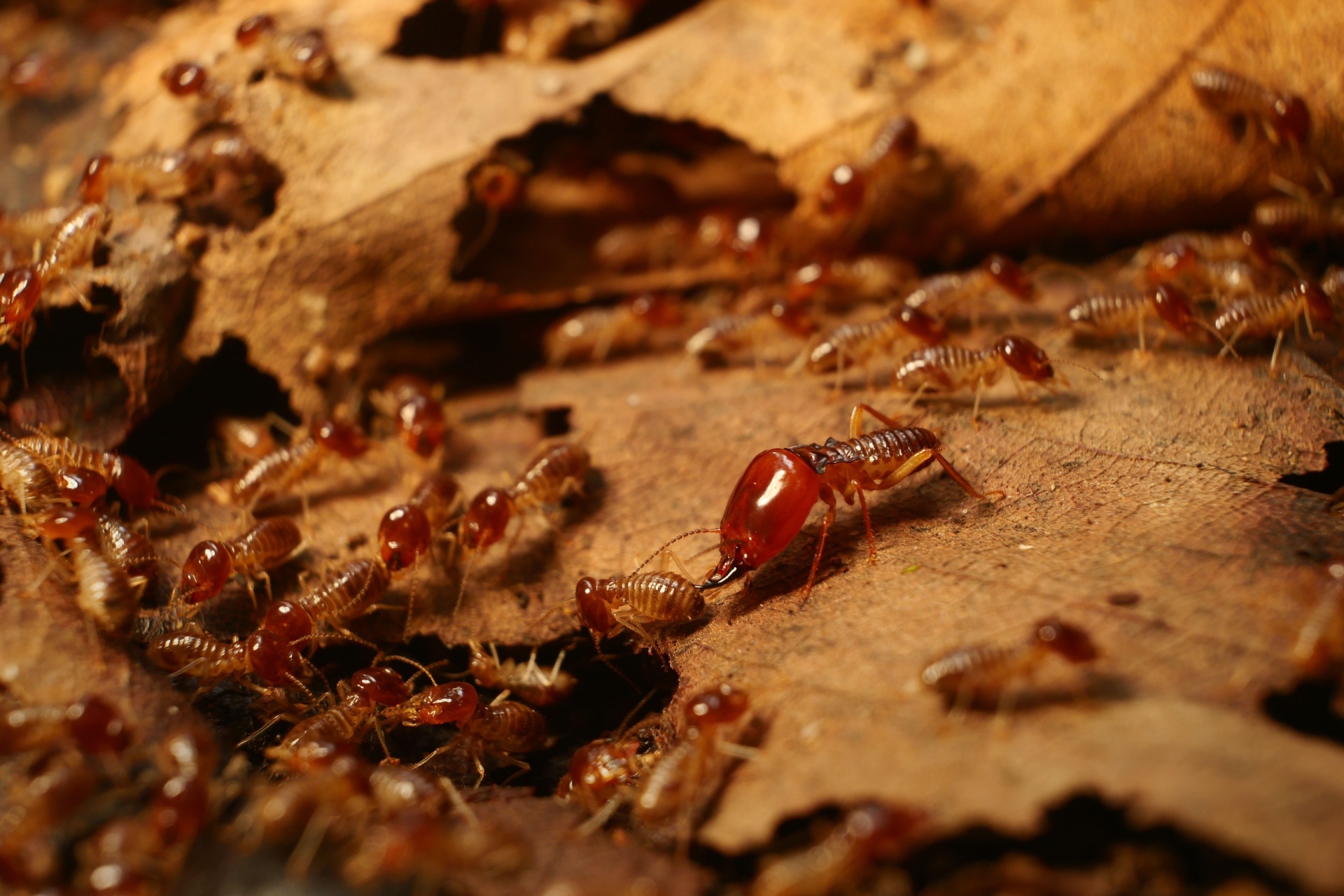
Termites are the most financially consequential pest in Naples, and both major species are present:
- Eastern subterranean termites live in the soil and access wood through mud tubes. Naples’s warm, perpetually moist soil supports large, aggressive colonies that feed on structural wood year-round. Signs include mud tubes on foundation walls, swarmer activity in spring, and soft or hollow wood near the ground level.
- Drywood termites infest wood directly from the air—no soil contact required. They establish colonies inside eaves, fascia, window trim, attic framing, and other exposed wood. Signs include pellet-shaped frass on windowsills and surfaces below infested wood, kick-out holes, and swarmer activity in late spring and summer.
Naples is in one of the highest termite pressure zones in the country. Annual professional inspections are essential.
Ants
Naples supports a wider variety of ant species than most markets:
- Ghost ants: Tiny, pale ants with dark heads that trail through kitchens and bathrooms. Extremely common in Southwest Florida. They nest in moist areas and are persistent indoor invaders.
- White-footed ants: Form massive colonies numbering in the millions. They do not respond to traditional baits the way other ant species do, making professional treatment essential.
- Carpenter ants: Large ants that excavate galleries inside moisture-damaged wood. In Naples’s humid climate, the amount of vulnerable wood around a typical property is substantial.
- Fire ants: Red imported fire ants build aggressive mound colonies in yards. Their stings are painful and can cause serious allergic reactions in children and pets.
- Bigheaded ants: Displace soil and create visible dirt mounds in landscaping and along hardscaping edges.
Roof Rats
Roof rats are the primary rodent concern in Naples. They are climbers that thrive in the tropical landscaping common throughout Collier County—palm trees, fruit trees, dense ornamental plantings, and ivy or vine ground covers. Roof rats jump from tree branches to rooflines and enter homes through gaps in eaves, soffits, attic vents, and plumbing penetrations. They nest in attics and wall voids, contaminate food storage areas, and damage wiring and insulation.
Cockroaches
- American cockroaches (also called palmetto bugs in Florida)—large, reddish-brown, associated with sewer systems, landscape debris, and exterior harborage. They fly on warm evenings and often enter through open doors, drains, and foundation gaps.
- German cockroaches – small, fast-breeding indoor pests that thrive in kitchens and bathrooms. The most difficult cockroach species to eliminate and the one that poses the greatest health risk through allergen production.
Mosquitoes and No-See-Ums
Naples’s warm, wet climate produces mosquitoes year-round, with peak populations during the summer rainy season (June through October). Standing water from daily afternoon thunderstorms, irrigation runoff, poor drainage, and the countless water-holding features in residential landscapes provides continuous breeding habitat.
No-see-ums (biting midges) are an additional nuisance pest specific to coastal Florida, particularly active during dawn and dusk near water features and dense vegetation.
Spiders
Common house spiders, wolf spiders, and orb weavers are frequent in Naples homes. Brown widow spiders, relatives of the black widow, are increasingly common throughout Southwest Florida, found in garages, under outdoor furniture, and in sheltered exterior locations.
Fleas and Ticks
The tropical climate supports flea and tick activity in every month. Homes with pets are most directly affected, but wildlife—raccoons, opossums, and feral cats—also introduces these pests to residential properties.
Stinging Insects
Paper wasps, yellow jackets, and carpenter bees are active around Naples homes for much of the year. Carpenter bees bore into untreated wood—fascia, decks, and porch framing—causing cosmetic and structural damage over time.
Why Year-Round Protection Is Essential
The common thread across every pest category in Naples is that the tropical climate eliminates the seasonal breaks that colder regions rely on. Every pest population is active year-round. Professional pest management that maintains consistent protection across all twelve months is not a luxury in Southwest Florida—it is a practical necessity.
If you want to know what pests are active on your Naples property, contact Pest Solutions Plus for a consultation.