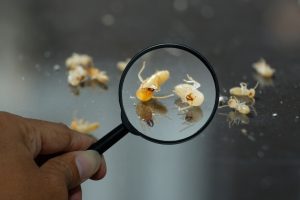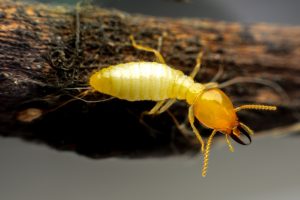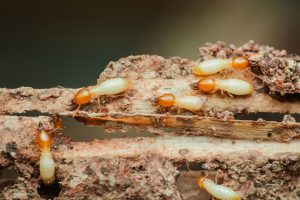
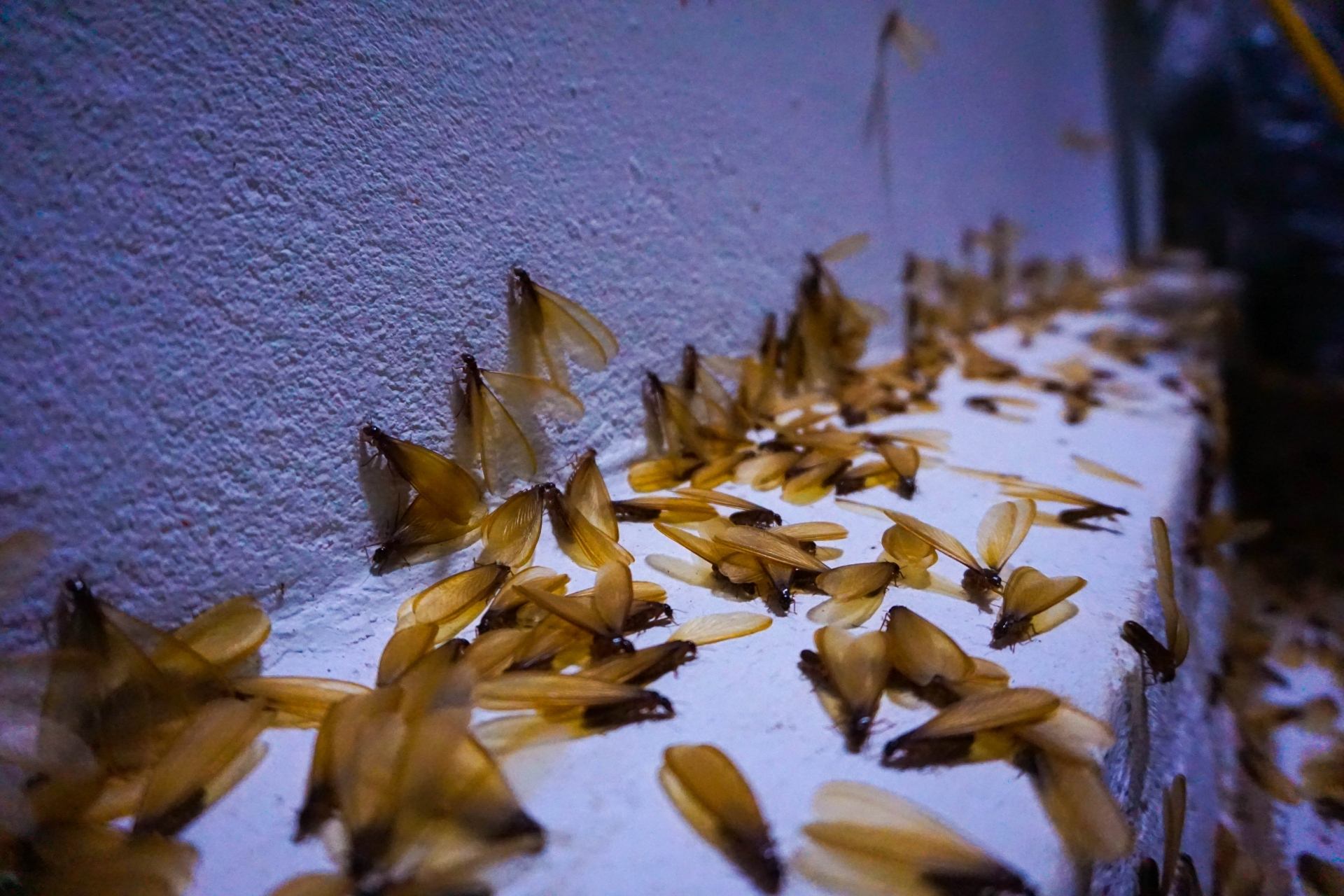
Flying ants and termite swarmers can look similar from across a room, but their antennae, waist, and wings provide useful clues. Ants generally have elbowed antennae, a narrow waist, and front wings longer than the hind wings. Termite swarmers have straighter antennae, a broad waist, and two pairs of wings that are close to equal length. If you are uncertain about the identification, termite control in Fort Myers should begin with an inspection rather than a guess.
Compare the Whole Insect
- Antennae: Winged ants usually have a noticeable bend; termite antennae look straighter and beadlike.
- Waist: Ants have a pinched connection between body sections; termites look thick through the middle.
- Wings: An ant’s front pair is visibly larger; a termite’s four wings are similar in size and extend beyond the body.
- Shed wings: Termite swarmers often release their wings after landing, leaving small, uniform piles near windows or doors.
These traits are easiest to see on an intact specimen. A crushed insect or a body missing wings can be hard to identify, so save one in a small sealed container or take a sharp close-up photograph.
Swarming Is a Reproductive Event
Both ants and termites produce winged adults that leave established colonies to mate and start new colonies. Warmth, humidity, rain, and seasonal conditions can influence when flights occur. Outdoor swarmers near lights do not automatically prove a colony is inside your house, but indoor emergence deserves prompt attention.
The location provides context. Insects coming through a wall seam, baseboard, window frame, or ceiling penetration may be emerging from a concealed area. A few found by an open door could have flown in from outside. Repeated swarms or discarded wings in the same interior location strengthen the case for inspection.
Why the Difference Is Important
Ant management depends on the species, nest location, and food preferences. Termite management depends on whether the termites are subterranean or drywood, the extent and location of activity, and the construction of the home. A product intended for nuisance ants will not resolve a termite colony hidden in wood or soil.
Southwest Florida supports conditions favorable to termites, and Pest Solutions Plus lists multiple termite services, including inspections, subterranean termite baiting, liquid treatments, fumigation, and alternative drywood termite treatments. An inspection determines which, if any, is appropriate; the presence of a winged insect alone does not select the treatment.
Clues Around the Structure
Subterranean termites may build mud tubes across foundations or other surfaces as protected travel routes between soil and wood. Drywood termites live within wood and can leave hard, pellet-like droppings below small openings. Ants may leave visible trails and often move between food, moisture, and a nest.
Wood damage also differs, but breaking open trim or structural components can destroy evidence and cause unnecessary damage. Hollow sounds are not conclusive because voids, delamination, and construction details can produce similar results. Let the inspection reach the material safely.
What to Do When You Find Swarmers
- Photograph the insects, the emergence point, and any wing piles before cleaning.
- Save several intact specimens in a sealed container if you can do so safely.
- Note the date, time, weather, room, and whether insects appeared near a window or from a crack.
- Vacuum remaining insects and dispose of the contents; avoid spraying the emergence point.
- Check nearby trim and visible foundation areas for mud tubes, small holes, or additional wings without dismantling the structure.
Avoid assuming that the swarm has ended the problem. Swarmers are only one life stage, and the parent colony may remain. Conversely, do not assume that every wing near a window means expensive structural damage. Evidence and identification should guide the next step.
Inspection Provides the Answer You Need
A termite professional can examine specimens, trace the emergence area, assess accessible wood and foundation conditions, and recommend monitoring or treatment based on findings. That prevents an ant treatment from delaying termite attention and prevents a harmless outdoor ant flight from triggering unnecessary work.
Moisture correction and wood-to-soil separation can support prevention, but neither proves that termites are absent. Keep gutters and drainage functioning, repair leaks, and avoid storing cellulose materials against the structure. Retain inspection records and note where previous swarmers appeared so future comparisons are based on a consistent history rather than memory alone.
If winged insects or piles of matching wings appear inside your Southwest Florida home, contact Pest Solutions Plus and keep a specimen available so the team can identify the swarm and inspect the right areas.