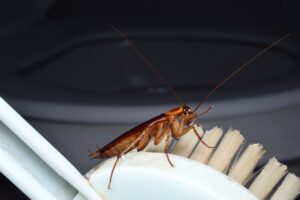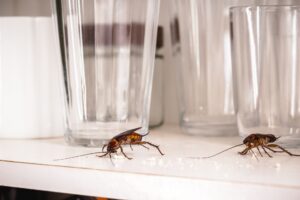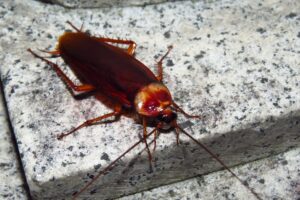

A large dark cockroach that appears near an exterior door may be one of the insects commonly called a palmetto bug. Small tan cockroaches gathering around a kitchen appliance may be German cockroaches. At Pest Solutions Plus, our pest control services help Fort Myers residents identify the insect and choose a response suited to its habits and location.
“Palmetto bug” is a common name used for several larger cockroaches, rather than a precise species identification. A clear photograph and the place where you found the insect are useful starting points. Size, markings, and the pattern of sightings help us narrow the possibilities.
What People Mean by Palmetto Bug
In Florida, people may use the term for large cockroaches such as American, smoky brown, or Florida woods cockroaches. These insects differ in appearance and behavior. Some commonly live outdoors in sheltered, damp places and enter buildings through available openings.
A large reddish-brown cockroach and a very dark broad-bodied one may therefore need different identification. Weather, moisture, and nearby hiding places can influence encounters. The shared nickname can make it harder to understand the source if the actual species remains uncertain.
Large cockroaches can also establish themselves in suitable building areas. Repeated indoor sightings deserve inspection even when the insect is usually associated with the outdoors. We consider the location, moisture conditions, and whether young insects are also present.
Recognize the German Cockroach Pattern
German cockroaches are smaller, usually light brown or tan, with two dark parallel stripes on the area just behind the head. Adults are commonly about half an inch long. Young stages are smaller and can look darker, so identifying only a tiny insect may require a closer examination.
They typically live and reproduce indoors where warmth, food, water, and tight hiding places are available. Kitchens and bathrooms are important inspection areas. The spaces around refrigerator motors, cabinet hinges, and plumbing penetrations may provide sheltered access to those resources.
A few small cockroaches repeatedly appearing near an appliance suggest a different problem from an occasional large insect beside a patio door. German cockroaches may arrive on belongings, deliveries, or used equipment and can spread within connected buildings. Their presence calls for an indoor assessment rather than relying only on exterior treatment.
Compare Appearance and Location
Use the place and pattern of the sightings to support identification:
- Note whether insects appear near an outside doorway or deep inside cabinetry.
- Photograph the back of an adult if you can do so without approaching closely.
- Record whether you see different sizes of the same insect in one area.
- Tell us about repeated sightings, egg cases, or dark marks near hiding places.
Asian cockroaches can resemble German cockroaches, and other small insects can create confusion. A specimen or sharp photograph can help us distinguish them. Avoid assuming every small tan roach requires the same treatment.
Check whether insects appear after doors are left open or emerge when a cabinet is opened. Those observations help direct the inspection toward an exterior route or an indoor hiding place. The time of day can add context, but it cannot establish the size of an infestation. A disturbed insect may appear when a cabinet is opened, and several conditions can affect daytime sightings. We assess supporting signs before drawing conclusions.
Why the Response Can Differ
For Cockroaches Associated With Outdoors
We look at door seals, damaged screens, moisture, and nearby shelter such as dense vegetation or accumulated debris. Reducing those resources and correcting appropriate openings can limit opportunities for entry. A repeated finding near one door may guide an inspection of that part of the building.
If the insects are using a damp interior area, a leak or other maintenance problem may also need correction. Treatment should follow the actual species and locations rather than the general nickname. We can explain which conditions are contributing and which repairs require another professional.
For an Indoor German Cockroach Infestation
Inspection and monitoring help identify the hiding places and where targeted control should be applied. Cleaning accessible food residue and correcting leaks supports the plan, while the insects in concealed spaces need direct attention. Follow-up helps determine whether the treatment is reaching the problem areas.
Avoid using sprays over bait placements or moving monitors without checking the instructions. Products can interfere with one another, and indiscriminate spraying can complicate targeted control. Ask how to clean and use the kitchen while treatment is underway.
Prepare Useful Information for the Visit
Leave a captured insect in a sealed container if feasible and write down the room where it was found. Tell us about new appliances, secondhand furniture, or recent work around plumbing when relevant. Those details can help explain possible introductions or travel routes without proving the source on their own.
Keep food protected and clear accessible clutter near affected cabinets. Avoid foggers or applying products to food-contact surfaces unless the label permits it. If you are unsure which cockroach is present, contact Pest Solutions Plus about your Fort Myers home. We can identify the concern and help you plan the appropriate indoor or exterior response.