
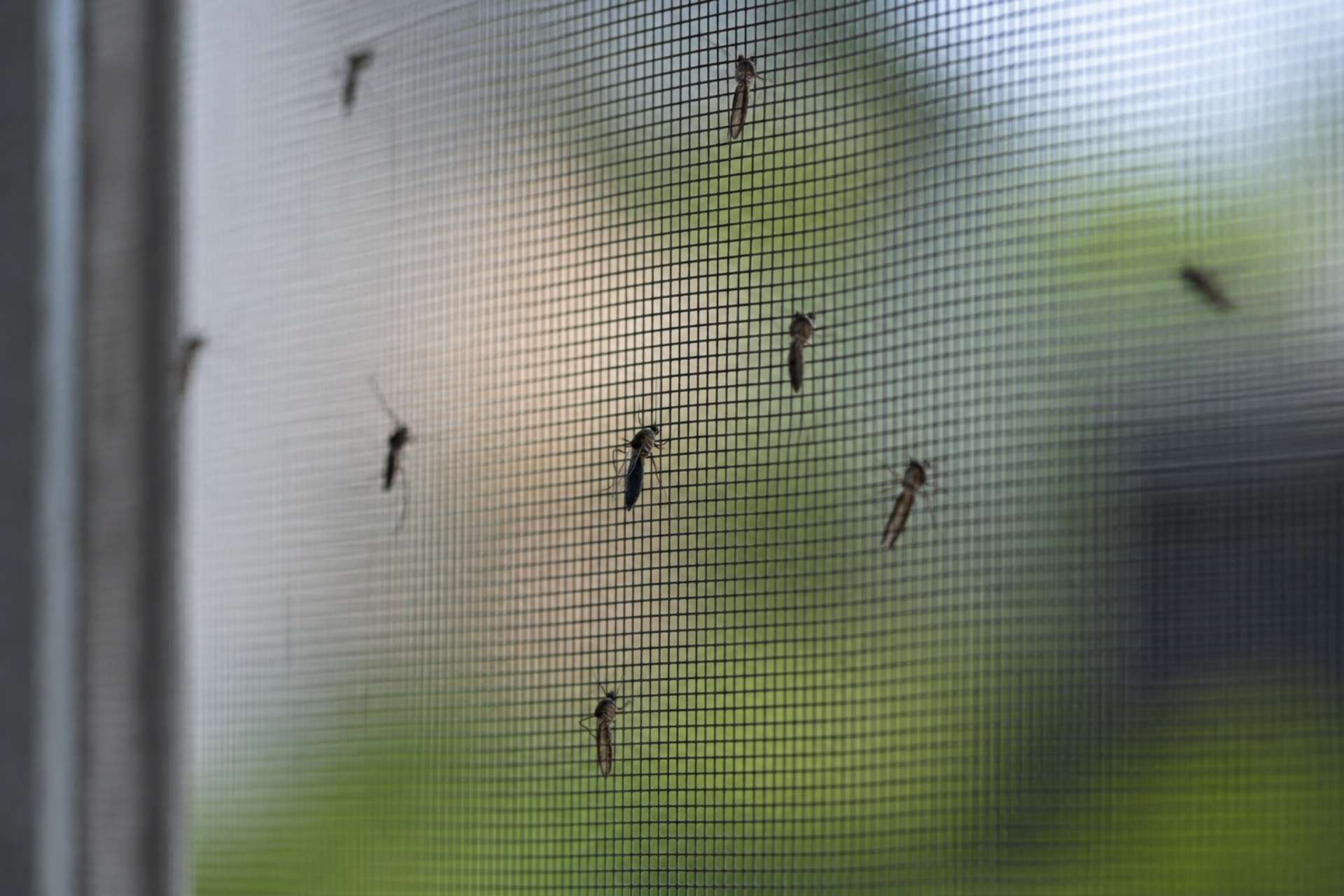
Tiny bugs around a Florida pool or lanai are often mosquitoes, biting midges commonly called “no-see-ums,” non-biting midges, gnats, springtails, thrips, or insects arriving from nearby plants. Screens and lights concentrate them where you notice them, but the correct response depends on identification. Pest control in Fort Myers can determine whether the source is standing water, damp organic material, landscaping, or an indoor route.
Common Possibilities Around Outdoor Living Areas
- Mosquitoes have narrow bodies and long legs; larvae develop in standing water rather than on dry pool decks.
- No-see-ums are extremely small biting flies that may pass through standard screens and are common near moist natural habitat.
- Non-biting midges resemble mosquitoes but do not bite; adults may gather in large numbers around lights.
- Fungus gnats develop in damp organic material, including overwatered pots, and weakly fly near plants.
- Springtails are tiny moisture-loving organisms that often jump and collect near wet surfaces, drains, or planters.
- Thrips and other plant insects may blow or fly from dense landscaping and collect on pale surfaces or screens.
Flying ants and termite swarmers can also appear in groups, especially after favorable weather. Those require a closer look at wings, antennae, and body shape rather than a quick label of “gnats.”
Why Screens Can Be Covered in Bugs
Screening sits between a lit, sheltered lanai and the surrounding landscape. At night, insects attracted to light may land on the mesh or search along its edges. Small species can pass through ordinary openings, while larger insects enter through torn panels, loose spline, door gaps, or unscreened roofline details.
The screen itself is usually not breeding the insects. It is a collection point that makes outdoor activity visible. Cleaning the mesh may provide temporary relief, but the number returns if lighting, nearby habitat, or an opening stays unchanged.
Pool Water Is Only One Water Source
A maintained, circulating swimming pool is generally less suitable for mosquito development than stagnant water. Check the pool cover, toys, floats, plant saucers, deck drains, gutters, and equipment housings. Even a shallow amount held for several days can support larvae.
Water chemistry should be handled according to pool-service guidance. Adding extra chlorine or household chemicals is not a safe substitute for mosquito source reduction, and it will not solve insects developing in a hidden container several feet away.
Landscaping Can Explain the Timing
Dense vegetation offers shade and humidity. Blooming or stressed plants may host thrips, whiteflies, aphids, or other tiny insects. Damp mulch and decaying leaves support flies and springtails. Rain and irrigation can trigger movement, while wind can carry plant insects onto a deck or screen.
Look at when the bugs appear. A cloud at dusk points in a different direction than insects hopping beside a wet drain at noon. Activity after watering a particular planter can reveal a local source. Photographs taken against a contrasting background help preserve details that disappear after cleanup.
Steps That Help Without Guessing
- Empty and scrub movable containers weekly, then store them so they cannot refill.
- Repair screen tears, door sweeps, loose frames, and gaps around utility lines.
- Clean screen tracks, drains, wet leaves, and organic debris from accessible areas.
- Adjust overwatering and repair irrigation leaks that keep planters or deck edges damp.
- Reduce unnecessary nighttime lighting or reposition fixtures away from frequently opened doors.
- Save an intact sample or close-up image before applying any pesticide.
Avoid fogging or spraying simply because insects are small. A product aimed at adult mosquitoes will not correct fungus gnat larvae in potting mix, and treating screens will not fix a drain or standing-water source. Product labels govern where and how pesticides may be used, especially around pools and water.
When the Bugs Need a Professional ID
Bites, repeated swarms, indoor migration, termite-like wings, or large numbers returning after cleanup justify inspection. A professional can compare the specimen with habitat clues and decide whether control should focus on water, plants, structural gaps, or a specific pest population.
Try to preserve context along with the sample. A bug collected from pool water, a potted plant, the outside face of a screen, or an indoor windowsill may represent four different sources. Note whether it jumped, bit, shed wings, or appeared only after lights came on. Those observations are often more useful than color, which can change under artificial light.
If tiny insects keep taking over your pool deck, lanai, or screens, send Pest Solutions Plus a service request and include when and where the activity is strongest so the inspection can start with useful evidence.