
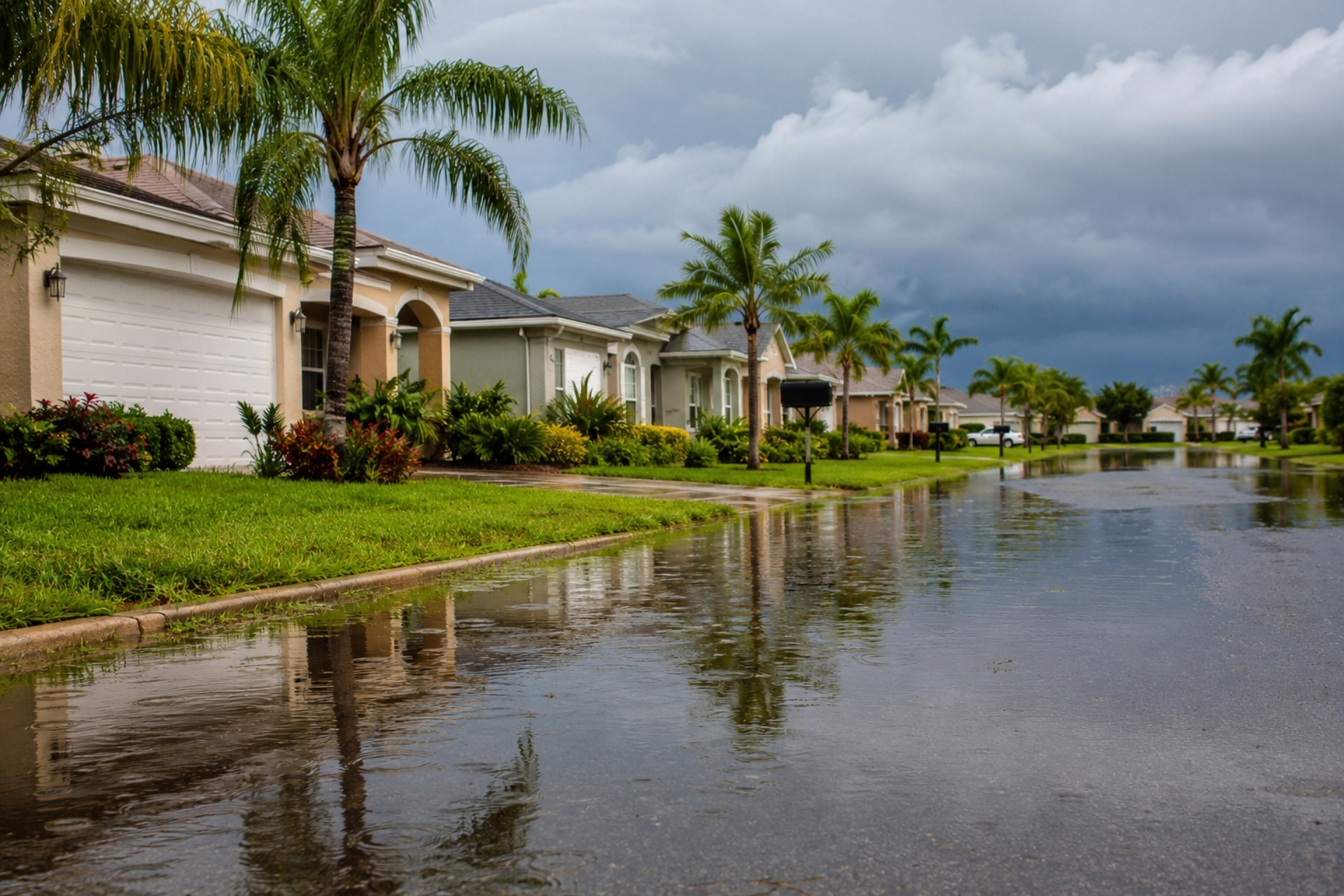
Heavy rain can make an unseen pest issue suddenly visible because water floods outdoor hiding places, shifts food sources, and creates new breeding habitat. When ants, cockroaches, mosquitoes, and rodents react to those changes, your house may offer the driest nearby shelter. Timely pest control in Fort Myers can identify which pest moved, where it entered, and what conditions are keeping it close to your Southwest Florida home.
Rain Changes the Ground Beneath a Pest
Many pests spend much of their time out of sight in soil, mulch, leaf litter, landscape beds, wall voids, drains, and other protected spaces. A long downpour can saturate or flood those areas. Ant colonies may relocate brood and workers toward higher ground. Outdoor cockroaches may leave soaked mulch or debris. Rodents may abandon low burrows or damaged shelter. These movements often push pests toward slabs, foundations, garages, lanais, and rooflines.
Heavy rain often makes nearby pest activity more visible by changing where pests seek shelter. It exposes activity that was already nearby and changes where pests can survive. That distinction helps explain why several insects may appear shortly after a storm even when your home was clean beforehand.
Standing Water Starts a Different Clock
Some storm effects are immediate, while others develop over the following week. Mosquitoes need water during their immature stages. Rain can fill buckets, plant saucers, clogged gutters, toys, tarps, drains, and small landscape depressions. Eggs already attached near a container’s waterline may hatch when rising water covers them. In warm weather, some mosquitoes can progress from egg to flying adult in roughly seven to ten days.
That means a yard can feel tolerable immediately after a storm and become much more uncomfortable days later. Removing water promptly interrupts that cycle. Dumping a container is helpful, but scrubbing its sides is also useful because some mosquito eggs adhere above the former waterline.
Southwest Florida Homes Offer Convenient Refuge
Air conditioning, plumbing, stored food, and protected voids make a house stable when outdoor conditions change. Pests may use gaps around utility lines, worn door sweeps, soffit openings, weep holes, damaged screens, or spaces where attached structures meet the home. A garage door that does not seal evenly can become a broad entry route during wind-driven rain.
Moisture inside the structure can extend the problem. A roof leak, damp baseboard, slow plumbing drip, or wet cardboard may keep insects comfortable after the weather clears. Humidity alone does not prove that pests are present, but moisture combined with shelter and food can support continued activity.
Different Pests Respond in Different Ways
Ant trails often become obvious when saturated soil disrupts a colony or outdoor food is washed away. Large outdoor cockroaches may enter through exterior gaps, but small German cockroaches usually live and reproduce indoors; finding those in a kitchen should not automatically be blamed on the storm. Mosquitoes build up around newly filled containers, while flies may gather around wet organic debris. Rats can take advantage of damaged screens, roof edges, or vegetation touching the structure.
Correct identification prevents wasted effort. Treating every small insect as an ant or every winged insect as a termite can send you after the wrong source. A professional inspection connects the pest to its biology, entry route, and moisture conditions.
What to Check After the Weather Clears
Walk the property only when conditions are safe. Look for water trapped in movable containers, sagging covers, clogged gutters, and landscape items that hold a shallow film. Check screens and exterior doors for storm damage. From the ground, note loose soffit material, lifted vent covers, or branches resting on the roof. Inside, watch for damp cabinets, stains, musty areas, pest droppings, or trails emerging near baseboards.
Keep mulch from pressing against siding, move stored items away from garage walls, and dry wet materials. Seal food in sturdy containers and clean spills, including pet food residue. These steps remove resources without scattering over-the-counter products across areas where they may be ineffective or interfere with a targeted treatment.
Why Symptoms Can Continue After Sunshine Returns
Outdoor surfaces may dry quickly while wall voids, mulch beds, attics, and shaded soil remain damp. A relocated ant colony can continue foraging indoors. Cockroaches that found shelter may stay near water and food. Mosquito breeding sites that were missed can keep producing adults. Storm damage may also leave an opening that remains usable long after the rain stops.
Repeated sightings, droppings, scratching sounds, termite wings, or a surge of mosquitoes point to a source that deserves closer attention. The useful question is not simply how to kill the pest you can see. It is why that pest is present now and what will keep replacements from following.
Timing is another useful clue. Activity that begins during the rain may indicate displacement, while a mosquito increase several days later points toward newly developed adults. Note whether sightings fade as materials dry or continue in the same room. That simple timeline can keep a storm-related visitor from being confused with a reproducing indoor population.
If rainy-season activity is spreading through your home or yard, contact Pest Solutions Plus for an inspection and a plan based on the pest, entry points, and moisture conditions around your property.