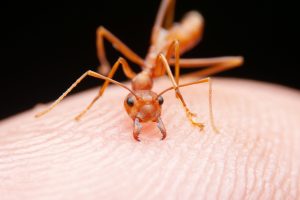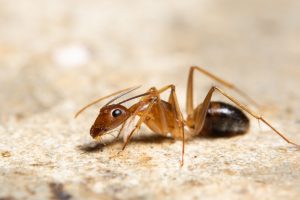
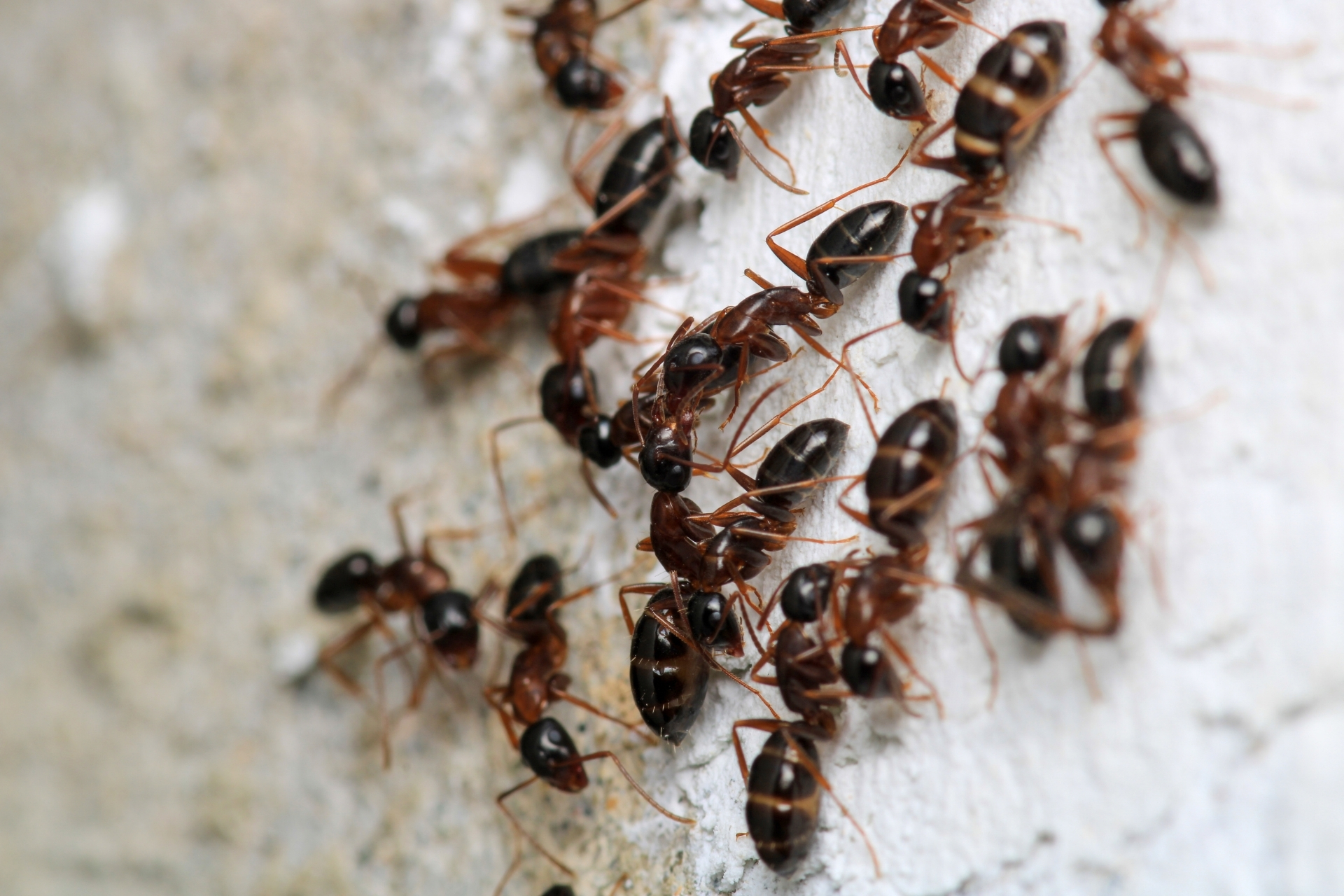
Ants often appear indoors after rain because saturated soil disrupts nests and outdoor foraging routes. Workers may move eggs and young to drier ground, then discover food or moisture inside through tiny foundation, window, and utility gaps. The pest control pros at Pest Solutions Plus in Fort Myers can identify the ant and determine whether the trail is a brief relocation or evidence of a colony nesting in or near your Southwest Florida home.
Rain Can Turn Your House Into Higher Ground
Many ant species nest in soil, mulch, beneath stones, or around roots. When water fills those spaces, the colony must protect its queen and brood. Elevated slabs, wall voids, garages, and covered lanais offer shelter from flooded ground. Even ants whose nest remains intact may change their routes when rain washes away scent trails or reduces outdoor food.
That is why an ant line may appear suddenly along a baseboard after a storm. The ants still need a usable opening. They often follow construction seams, plumbing lines, cable penetrations, window frames, and branches touching the structure.
Indoor Food and Water Keep the Trail Active
Once scouts find a resource, they lay a chemical trail that recruits nestmates. A few crumbs under an appliance, syrup on a container, pet food residue, or moisture beneath a sink can sustain traffic. Ants may also visit bathrooms and laundry rooms for condensation or a slow leak.
Wiping away visible ants can temporarily remove part of the trail, but the source may continue sending workers. Clean the route with ordinary household cleaning methods suitable for the surface, then address the food or moisture. Store sweet and greasy foods in sealed containers, rinse recyclables, and avoid leaving pet dishes with residue for long periods.
Species Identification Affects Control
Southwest Florida supports many ants with different nesting and feeding habits. Some nest mainly outdoors and enter to forage. Others readily establish colonies in wall voids, cabinets, or potted plants. Certain species form multiple connected colonies or split when disturbed, making random repellent sprays a poor strategy.
Size and color alone may not be enough for identification. Where the ants travel, whether they have a noticeable odor when crushed, and whether winged ants are present can provide useful clues. A professional can examine intact specimens and inspect likely nesting zones before choosing bait, exclusion, or another targeted measure.
Why the Problem May Last After the Yard Dries
The original nest could recover outdoors, but a satellite group may remain near a reliable indoor resource. Moisture trapped in a wall, window frame, or cabinet can also persist longer than exposed soil. If ants repeatedly emerge from the same crack, the opening may connect to a protected void rather than directly outside.
Heavy rain can also wash away an exterior treatment or alter pest routes, depending on the product, application site, and timing. Do not automatically reapply a pesticide. Follow the label and let a professional evaluate whether treatment, bait placement, or a repair is appropriate.
Reduce the Conditions Ants Are Following
Start with the trail. Observe it long enough to see where ants enter and what they visit. Clean food residue, repair plumbing drips, dry wet cabinets, and empty overflowing trash. Outside, keep mulch and leaf litter from covering the base of siding, trim vegetation away from the structure, and make sure gutters and downspouts direct water appropriately.
Seal accessible gaps only after you understand the route. Closing one crack while leaving the colony and attractant in place can shift the trail to another opening. Caulk is also not a substitute for repairing water-damaged trim or an improperly sealed penetration.
Know When a Trail Needs Professional Attention
A short-lived line after one storm may disappear once conditions normalize and resources are removed. Repeated trails, ants in several rooms, activity from electrical or plumbing openings, or winged ants indoors justify closer inspection. Large biting ants, suspected fire ants, or ants around sensitive areas also warrant caution.
Avoid placing homemade pesticide mixtures where children, pets, or wildlife may reach them. Store-bought products must be used exactly as labeled. A targeted plan is built around the species and colony behavior, not the number of ants visible at one moment.
Do not disturb a trail immediately if you are waiting for an inspection. Its direction may reveal whether the colony is outside, inside a wall, or connected to a planter. Take a photo, note the route, then protect exposed food and keep people and pets away from any stinging species. Good evidence shortens the path from identification to an appropriate plan.
If rainy weather keeps bringing ant trails into your kitchen, bathroom, or lanai, schedule an assessment with Pest Solutions Plus to find the route and choose a response suited to the colony.